



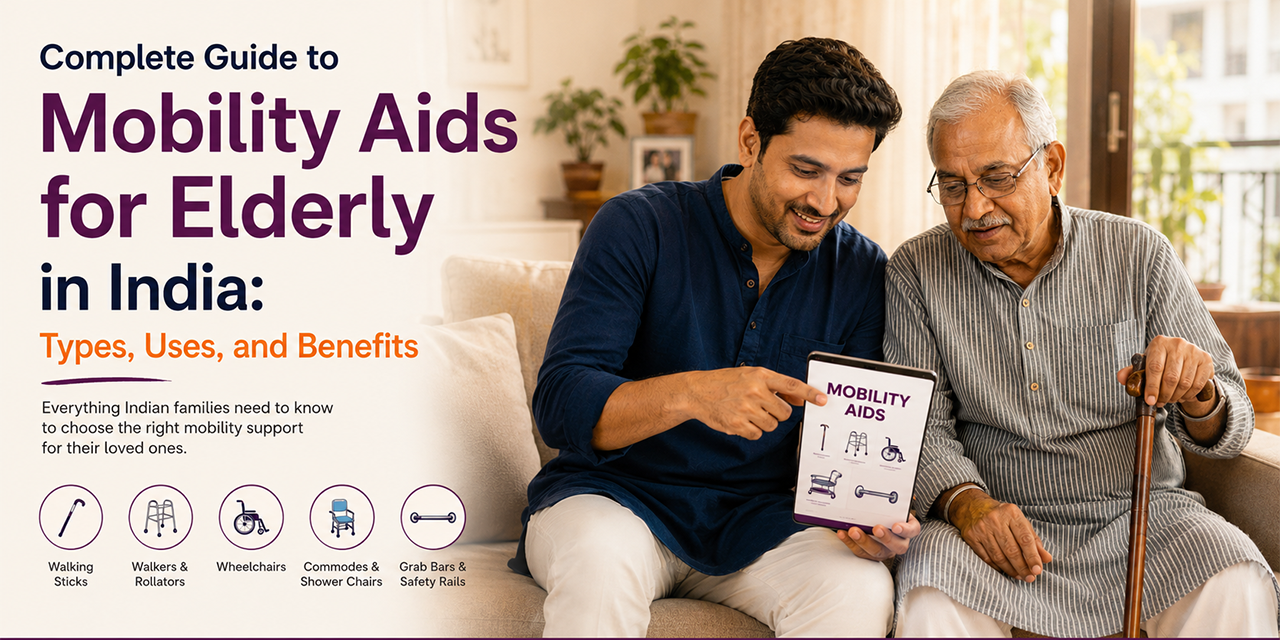
Complete Guide to Mobility Aids for Elderly in India: Types, Uses, and Benefits
India's elderly population is growing faster than most people realise. According to the United Nations Population Fund's India Ageing Report (https://india.unfpa.org/en/publications/india-ageing-report-2023), the number of people aged 60 and above in India is expected to reach 347 million by 2050. With that comes a rising need for practical mobility support — not just inside hospitals, but in everyday life at home, in cities, and while travelling.
For many families, navigating the world of mobility aids for elderly in India is unfamiliar territory. What's available, what actually works, who needs what, and when to introduce it — these are real questions families deal with, often in stressful circumstances. This guide covers the main categories clearly and practically.
Why the Right Aid Matters More Than People Think
There's a tendency to think of mobility aids as a last resort — something you bring in only when things have become quite difficult. That's backwards. Introducing appropriate support earlier, when mobility is declining but not yet severely limited, is far better for long-term outcomes.
The right aid at the right stage:
- Prevents falls, which are a leading cause of hospitalisation in Indian elderly (the WHO estimates that falls account for the majority of injury-related deaths in people over 65)
- Slows functional decline by enabling continued movement and activity
- Reduces caregiver burden on family members
- Maintains the elderly person's confidence and independence
- Allows continued participation in social and family life
Walking Sticks and Canes
The starting point for most people with mild balance issues or one-sided weakness.
A walking stick or cane offloads weight from one leg, improves balance, and provides a psychological anchor for people who are nervous about falling. They're lightweight, inexpensive, and easy to use without training.
Best suited for:
- Mild arthritis or knee pain affecting one side
- Recovering from minor leg or hip procedures
- General age-related balance decline
- Outdoor use on uneven terrain
Modern canes come in adjustable heights, quad-tip versions for extra stability, and foldable designs for easy carrying. MobiCrew stocks a range of walking sticks suitable for Indian conditions at https://mobicrew.com/products/.
Walkers and Rollators
When a cane isn't enough and both sides need support, walkers are the appropriate next step.
A standard walker — four legs, no wheels — provides maximum stability and is ideal for people who need to pause and re-balance with each step. It requires some upper body strength to lift and advance.
A rollator is a wheeled walker with handbrakes and usually a built-in seat. It's better for people who can move at a reasonable pace but need ongoing balance support. The seat is genuinely useful during outings when resting spots are scarce.
Best suited for:
- Post hip or knee replacement recovery
- Parkinson's disease and related balance conditions
- Moderate mobility limitations from multiple chronic conditions
- People who fatigue quickly but can still walk with support
Wheelchairs — Manual and Electric
Wheelchairs become relevant when walking independently is no longer safe or sustainable over any meaningful distance.
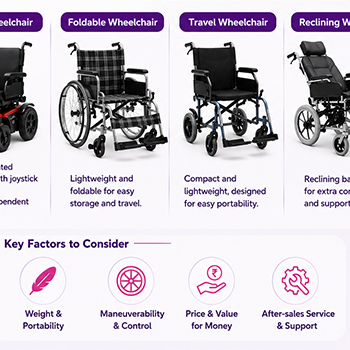
Manual wheelchairs are propelled by the user or pushed by a companion. They're lighter and easier to transport but require either arm strength from the user or consistent help from someone else.
Electric wheelchairs allow independent movement via joystick control. Folding electric models have become increasingly popular because they fit in standard vehicles, store easily at home, and handle the stop-start navigation of Indian cities better than bulkier models.
According to MobiCrew's own mobility guide (https://mobicrew.com/blog-details/mobility-aids-to-the-rescue), choosing the right wheelchair type depends significantly on the user's level of disability, upper body strength, and the environments they move through most often.
Best suited for:
- Individuals unable to walk independently or for more than short distances
- Long-distance navigation within hospitals, airports, and shopping areas
- Post-stroke recovery, fractures, or neurological conditions
- Full-time use for people with permanent mobility limitations
Commode and Shower Chairs
Often overlooked in discussions of mobility aids, but critically important for daily safety at home.
Bathroom accidents are one of the most common causes of falls in elderly individuals. A shower chair or raised commode reduces the physical demand of personal hygiene routines and significantly decreases fall risk in wet environments.
MobiCrew stocks commode and shower chair options: https://mobicrew.com/products/
Grab Bars and Safety Rails
Another home modification that functions as a mobility aid. Strategically placed grab bars near toilets, in showers, and along staircases provide support for transitions — sitting to standing, stepping in and out of a bath, navigating stairs safely.
The National Ageing Research Institute (https://www.nari.net.au) and Indian geriatric specialists consistently recommend these as the highest-impact, lowest-cost intervention for reducing fall risk in the home.
How to Choose the Right Aid
The right choice depends on several factors that need honest assessment:
- What's causing the mobility limitation — temporary injury, progressive condition, or age-related decline?
- Which environments will the person use the aid in — home only, urban outdoors, travel?
- Does the person have the strength and coordination to use the aid independently?
- Is there a caregiver who will be present to assist?
A physiotherapist or occupational therapist can assess all of this and make a specific recommendation. In Mumbai, rehabilitation specialists at hospitals like Hinduja, Kokilaben, and Lilavati are equipped to do this assessment and can prescribe the appropriate aid.
How MobiCrew Supports Elderly Mobility
Getting the right equipment is step one. But in a city like Mumbai, the bigger challenge is often what happens next — navigating daily life with that equipment.
MobiCrew provides trained mobility companions who work alongside elderly individuals using any type of mobility aid. This includes:
- Outdoor assistance and city navigation
- Hospital and clinic accompaniment
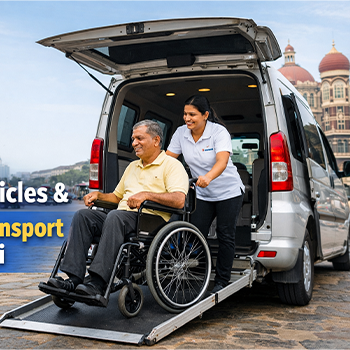
- Wheelchair assistance and transfers
- Support during travel or family events
They also provide a curated range of mobility products for elderly users available at https://mobicrew.com/products/ — including wheelchairs, walkers, rollators, grab bars, commode chairs, and more.
To book a mobility companion for an elderly family member: https://mobicrew.com/mobility-booking
The Right Aid Changes Daily Life
Mobility aids for elderly in India aren't about accepting limitation. They're about preserving the ability to participate — in family life, in daily routines, in the ordinary things that make life meaningful. Choosing the right one, at the right stage, with the right support around it, makes a genuine and lasting difference.